Choose Your Level of Preparedness
Every vault is engineered around a precise macronutrient ratio — real seed counts, real garden math, real caloric yields.
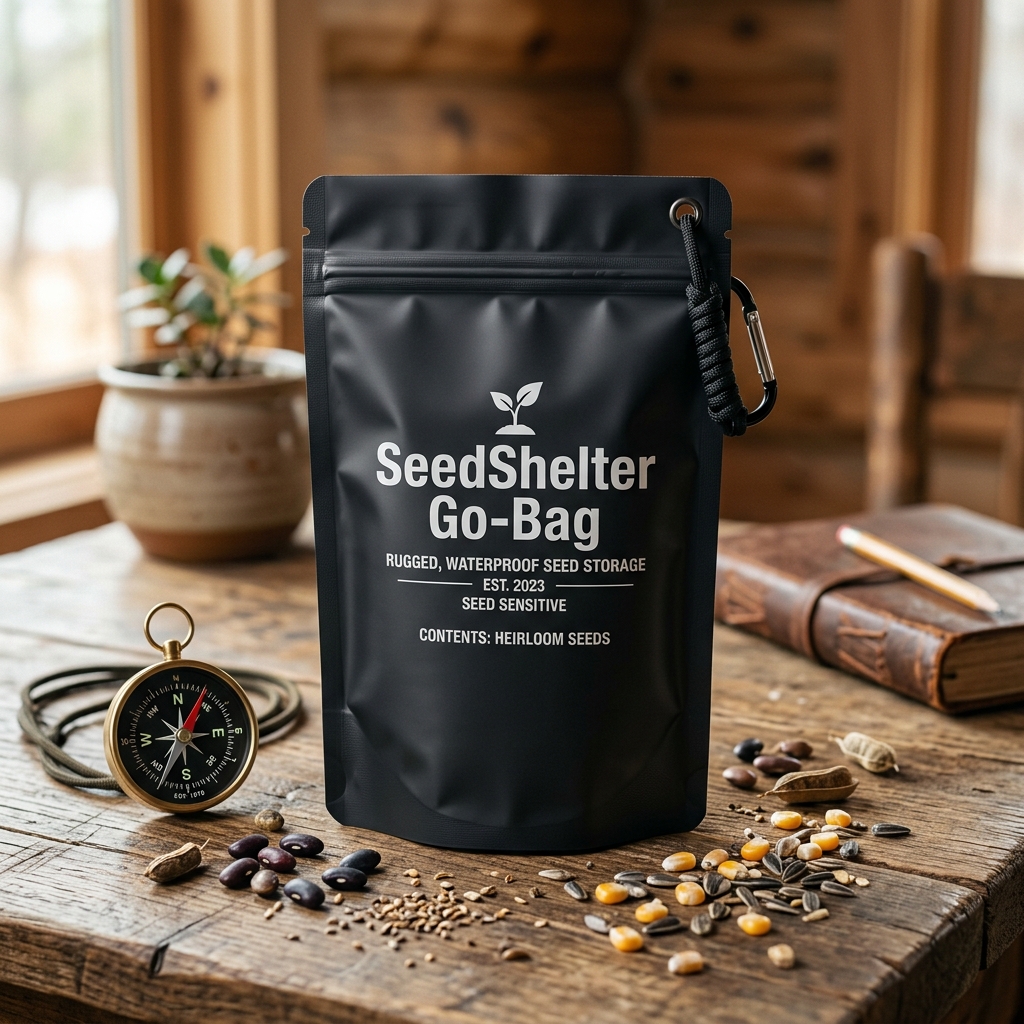
The "Go-Bag" Pouch
Ultralight Mylar pack for 72-hour bug-out scenarios. First edible harvest in 14 days.
- ✓ Radish, bush beans, spinach, kale
- ✓ First harvest in 14–21 days
- ✓ 6×9" flat-pack Mylar pouch
- ✓ 5+ year shelf life sealed
USDA Zones 3–10 · Balcony pots OK · Min. 180 sq ft open ground or equivalent containers
Radish 21d → Spinach 30d → Bush Beans 45d → Kale 50d
- Bug-out: Fast greens within 2 weeks with radish & spinach
- Urban shelter: Grow in 5-gallon buckets on a fire escape or patio
- Limited water: Prioritize radish (low water) and kale (drought-tolerant)
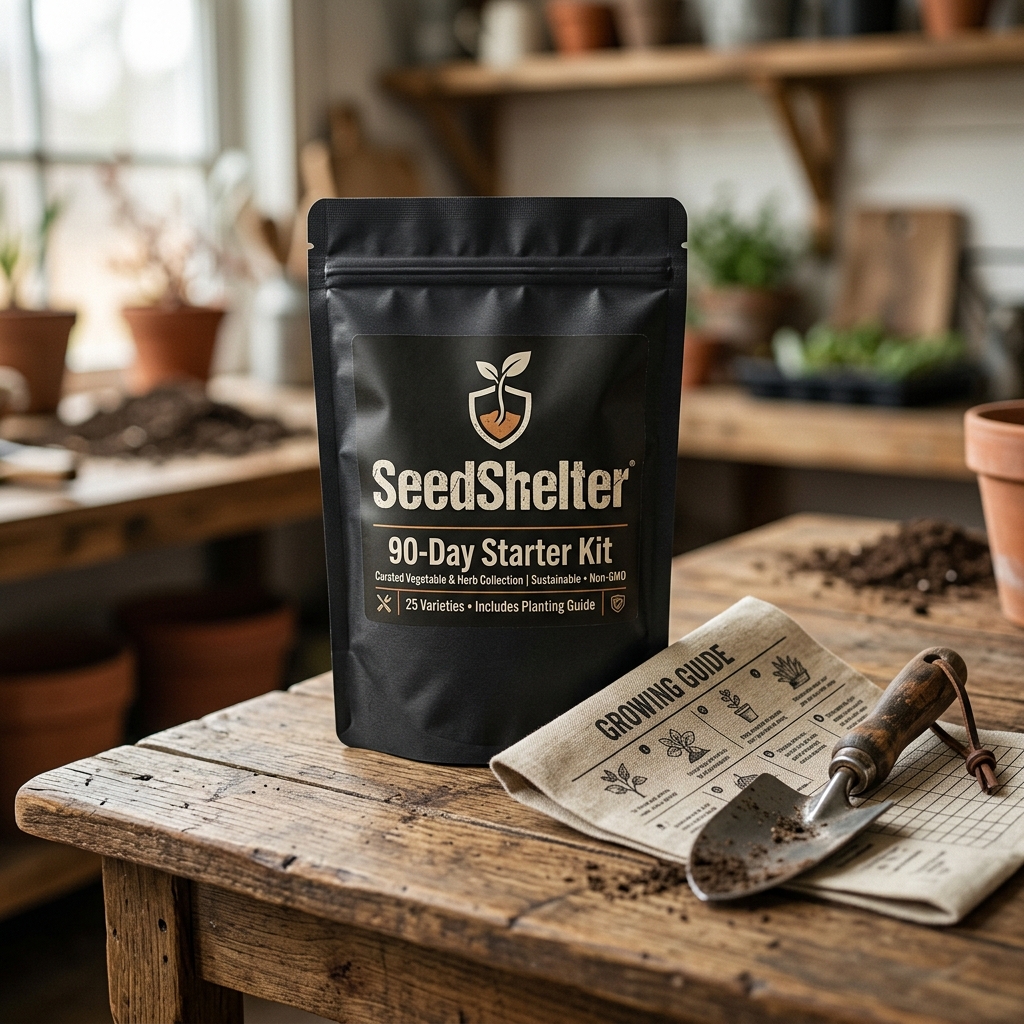
90-Day Starter Kit
One person, 90 days of balanced nutrition. The bridge between impulse prep and family-scale security.
- ✓ 10 varieties + 2 medicinal herbs
- ✓ Balanced carb/protein/fat ratio
- ✓ 8×12" tactical Mylar pouch
- ✓ Planting guide included
USDA Zones 3–10 · Requires ~580 sq ft (24×24 ft plot) · Raised bed friendly
Fast greens 14–30d → Beans/peas 55d → Corn/squash 100d
- Homestead start: Complete first garden with balanced nutrition
- Suburban grid-down: Plant in raised beds or tilled lawn
- Medicinal: Chamomile for stress/sleep, echinacea for immune support
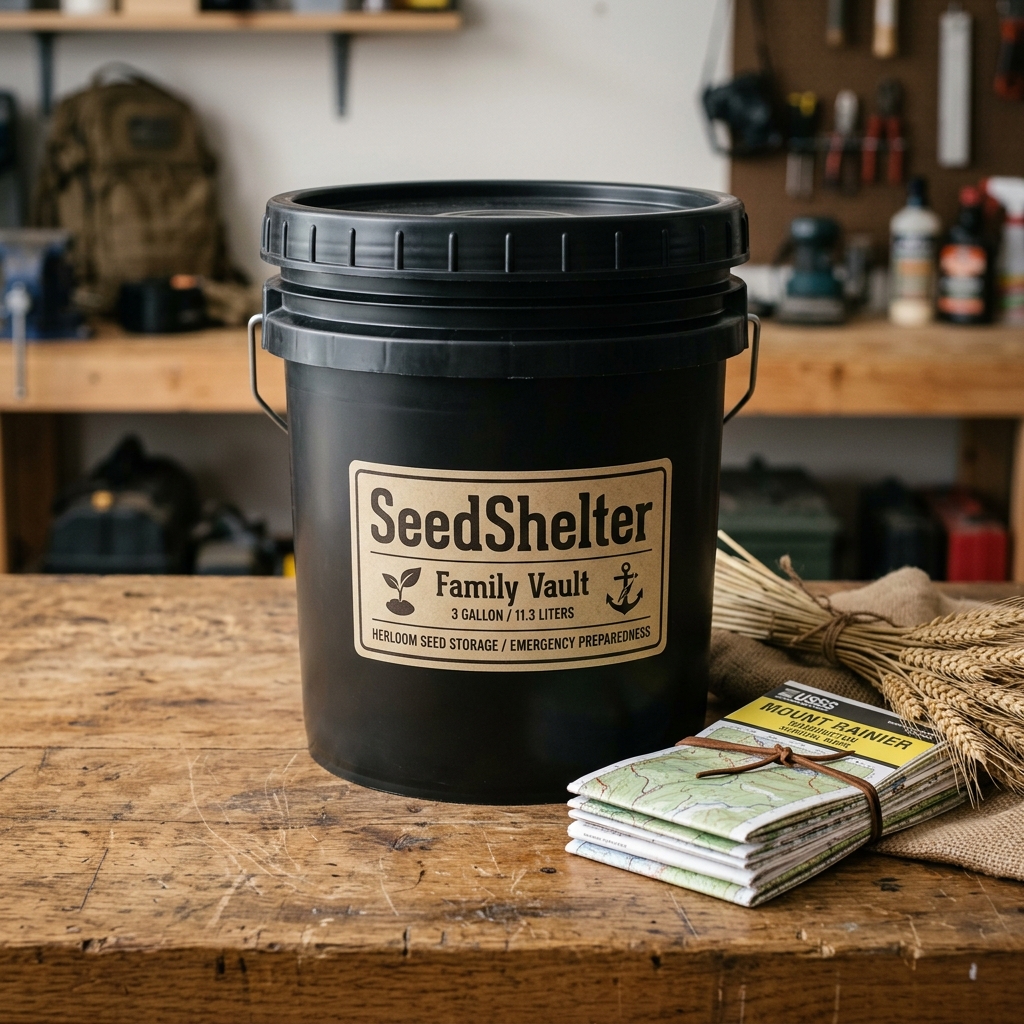
Family Vault
3-gallon Gamma-sealed bucket. Full-year seed supply for a family of 5, macro-balanced for real nutritional independence.
- ✓ 50% Carbs — Dent corn, winter squash
- ✓ 30% Protein — Pole beans, peas
- ✓ 20% Fats & Micros — Sunflower, herbs
- ✓ 3-gal bucket + Gamma Seal lid
- ✓ Full planting calendar included
USDA Zones 3–10 · ~1,800 sq ft (42×42 ft plot) · Suburban backyard or community garden
- Family homestead: Full nutritional independence for 5 people
- Three Sisters planting: Corn + beans + squash companion method
- Seed saving: Harvest and replant year after year indefinitely
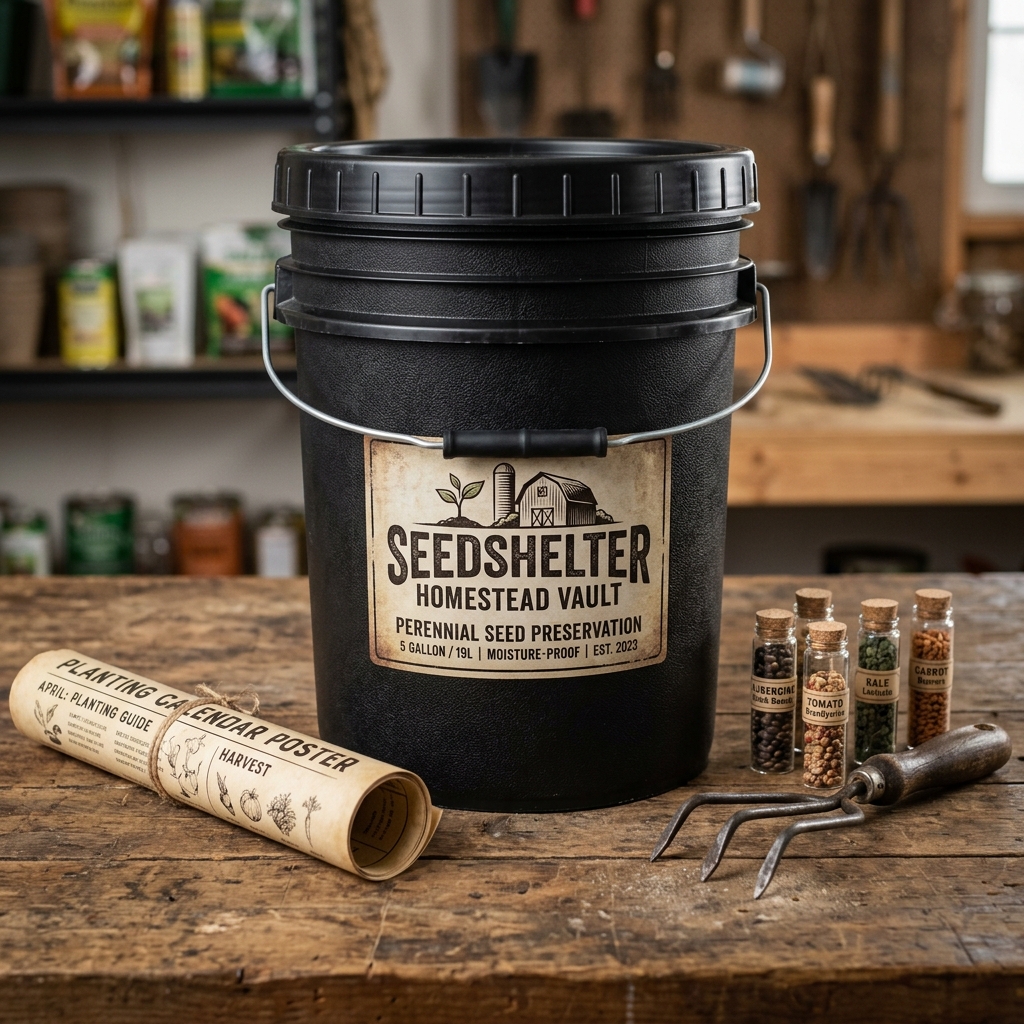
Homestead Vault
5-gallon Gamma-sealed bucket packed to 75%. Maximum variety, maximum yield — multi-year seed bank for serious homesteaders.
- ✓ 18 heirloom varieties + medicinals
- ✓ Includes wheat & amaranth grain seeds
- ✓ Multi-year replanting potential
- ✓ 5-gal bucket + Gamma Seal lid
- ✓ Full-color planting calendar poster
USDA Zones 3–10 · ~3,500 sq ft (~1/12 acre) · Rural homestead, large suburban lot, or community plot
- Full homestead: Half-acre food forest with grain production
- Community resilience: Split among neighbors, share harvest
- Seed banking: Enough genetic diversity for a multi-generational seed library
- Wheat/amaranth: Grind into flour for bread — true grain independence